Introduction
FermiLink is a unified AI agent framework for autonomous scientific computing on laptops, workstations, HPC clusters, and cellphones. It combines scientific package management, workflows at different scales, and multiple interaction interfaces in one consistent system.
What makes FermiLink practical
Many scientific-agent systems break down when you switch tools or scale up task complexity. FermiLink is designed to stay consistent:
one uniform package-selection layer automatically routes requests to the most suitable installed scientific packages;
one unified short-term/long-term memory model for iterative and long-running work in the same workspace;
three distinct workflows for computational tasks at different scales.
You can start quickly with built-in scientific packages
(fermilink install), and you can also turn your own local projects or paper
pipelines into reusable package knowledge with
fermilink compile / fermilink recompile.
Three major autonomous workflows
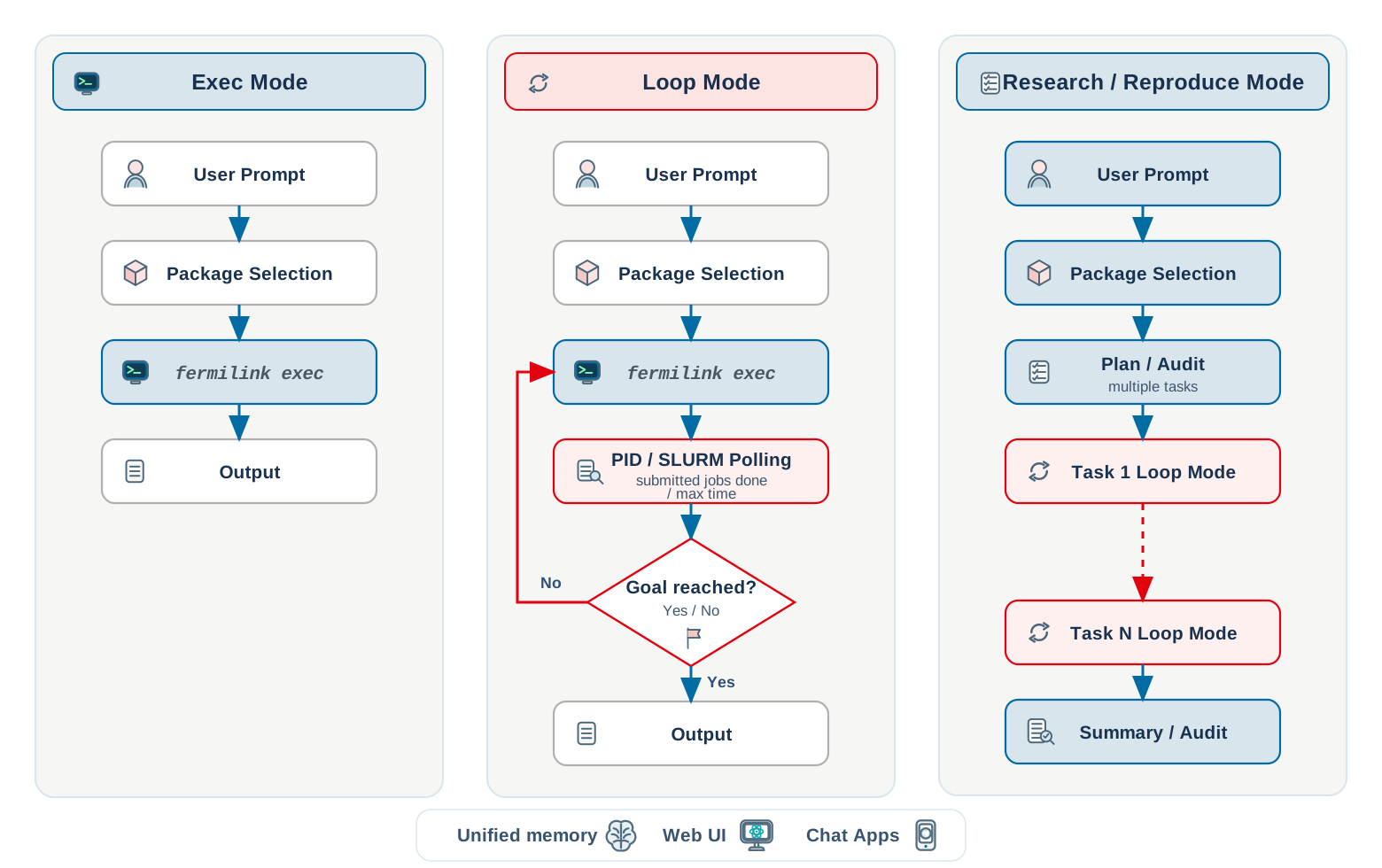
Three major FermiLink workflows are supported in FermiLink:
exec: one prompt, one agent run; suitable for short computing (< 30 minutes).loop: autonomous iteration with memory updates, local PID and SLURM job polling, and long-running task support.research/reproduce: planner + task-loop workflows for idea-to-results and paper-reproduction workflows, suitable for simulations at scale of a research paper.
Package management workflow
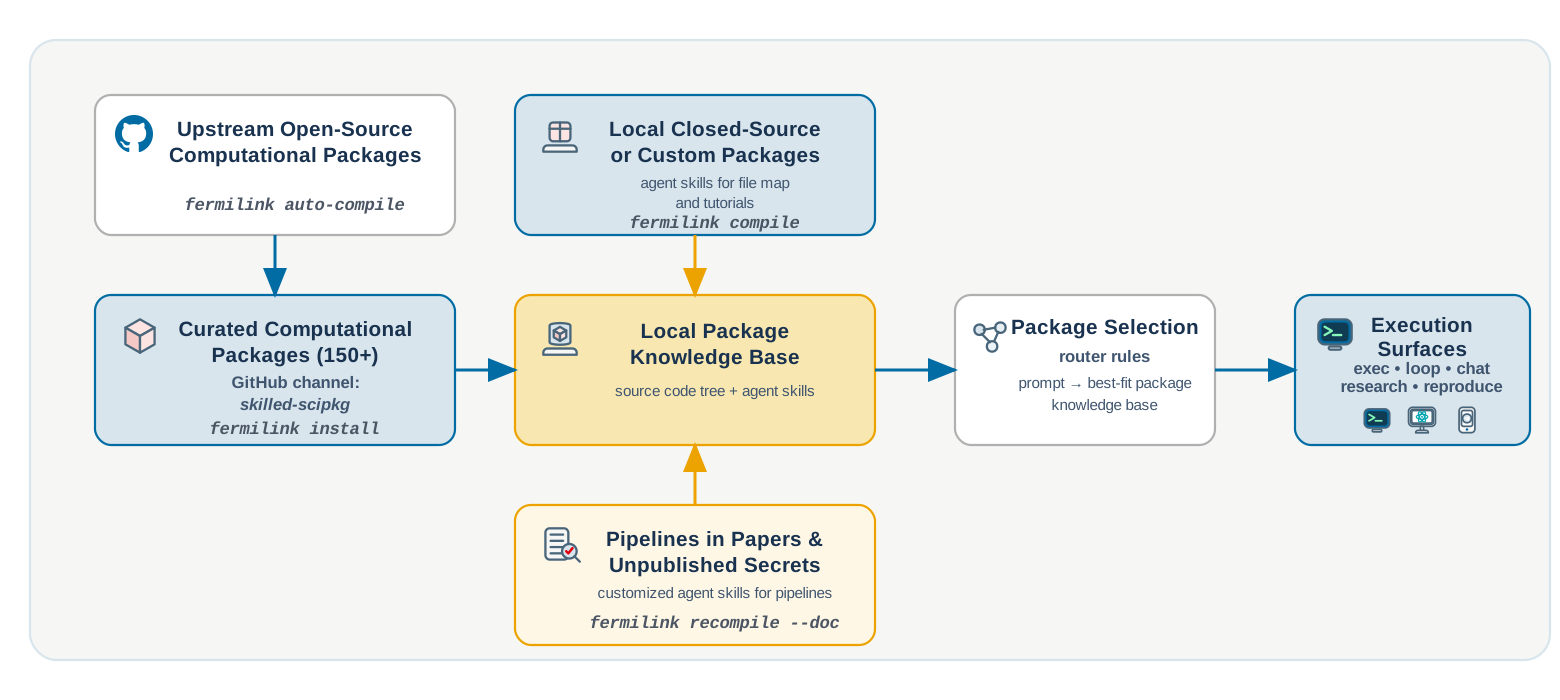
FermiLink uses Agent Skills to compress knowledge for agent reasoning. It has a built-in **Curated Computational Packages** channel which stores the full source-code tree + Agent Skills containing the entry-level tutorials and the informative file map of this source-code tree. This design allows AI agents to efficiently locate and access the most relevant documentation, tutorials, and source code functions in the source code tree for reasoning. Common pitfalls for using the package are also highlighted in Agent Skills. This GitHub channel now supports more than 150 scientific packages across multiple domains.
Users can also easily use the command line tools in FermiLink to add their own local packages. Additionally, users can add pipelines in research papers, database, or unpublished secrets as additional Agent Skills for one specific package. This package knowledge base, once installed, is used across all jobs in FermiLink globally.
How to choose your starting point
Use
fermilink execwhen you need a direct result quickly.Use
fermilink loopwhen a task needs iterative refinement or long simulation waits (say, > 30 minutes).Use
fermilink reproduceorfermilink researchwhen you need publication-scale workflows.Use
fermilink compile/fermilink recompilewhen your package knowledge base should be created and updated.
See Architecture for the full runtime flow and contracts.